

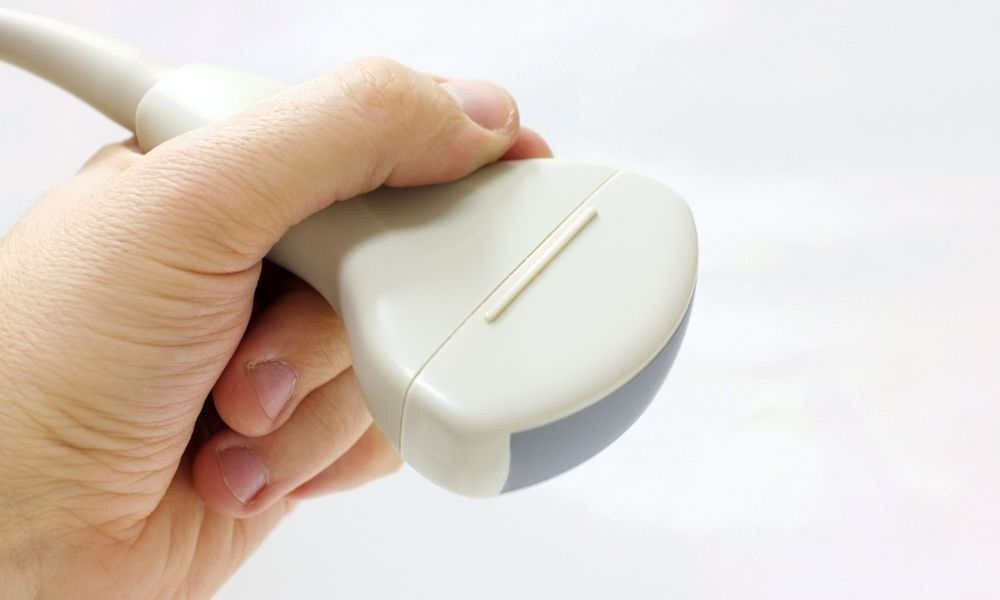
There are multiple ultrasound probes and options available on the market, which can make choosing the perfect ultrasound equipment for sale difficult. Whether you want a new machine or a replacement ultrasound probe, read on for how to choose the correct ultrasound probe.
Frequency
Materials made from ceramic crystals, called piezo-electrics, produce sound waves when supplied with an electrical current. These waves generate signals at a particular speed and distance, which are measured in MHz, or megahertz.
Speed and distance aren’t the only interactions that impact a transducer’s frequency. Reflection, refraction, scatter, attenuation, and a patient’s anatomy affect the sound waves in an ultrasound machine.
The frequency range affects the quality of the images and makes a huge difference in the clinical application required. Ultrasound probes with a higher frequency, around 7 to 20 MHz, produce images with a higher resolution. Conversely, arrays with a lower range (2 to 5 MHz) will produce lower resolution but better deep penetration.
Type of Array
The array makes all the difference in both the image quality and determines what type of ultrasound probe you want based on clinical needs. A properly maintained array is essential, and our ultrasound probe repair services can help extend the life of your equipment.
While many array formats exist, the following four are the most popular. Each of these formats is designed to produce a specific kind of image.
Curved or Convex Array
A curved or convex array is a high-element-count array (192 to 6000 elements). They are used primarily in abdominal, OB, and general ultrasound applications. The curved face of the array provides a wide, fan-shaped field of view. The image produced is a sector shape, with a narrow near field that widens as it goes deeper. The footprint of this ultrasound probe is large, so it may not be ideal for use in small areas or between ribs.
Linear Array
A linear array will produce sharp, high-resolution images. It is used for vascular, breast, thyroid, and small parts examinations, along with musculoskeletal. This array has a flat face, creating a rectangular or square-shaped field of view. Its design allows for a large near-field view, making it ideal for superficial structures. If your linear ultrasound probe is malfunctioning, consider our ultrasound repair service.
Micro-Curved Array
A micro-curved array will produce high-resolution images and is used mainly in women’s health applications (OB/GYN, Prostate, etc.). This ultrasound probe is smaller than the curved array, with a tighter curve. It creates a sector image that is similar in shape to the curved array but is better suited for smaller areas due to its smaller footprint.
Phased Array
A phased array is a small footprint array with multiple stacks or layers. It is used for cardiac, deep abdominal, and some transcranial examinations. This array has a very small footprint and produces a sector-shaped image. Unlike the curved arrays, the phased array uses electronic steering to create its image, which allows it to access and image structures between ribs or in other tight anatomical spaces.
Intended Clinical Application
Another tip on how to choose the correct ultrasound equipment is to know the clinical application you are planning to perform. Regular ultrasound maintenance is also key to ensuring your probes are always ready for use.
Probes are designed to fit the clinical application used. It also determines the style or shape of the array and other attributes of the ultrasound probe design.
Curved and Micro-curved Probes
Curved and Micro-curved probes operate at mid-range frequencies but still offer high-resolution images. Their wide field of view makes them ideal for providing a broad overview of larger organs and for general screening purposes.
Clinical Applications and Use Cases:
- abdomen
- bladder
- general abdominal imaging
- hepatobiliary (liver, gallbladder, bile ducts)
- obstetrics and gynecology (OB/GYN)
- pelvic exams
- prostate
- renal (kidney)
- urology
- Linear Probes
Linear Probes
Linear probes operate at high frequencies. This allows for better superficial imaging and high-resolution images. The flat shape of the linear array provides a clear, rectangular view of structures right at the skin's surface and is often preferred for guiding procedures like biopsies or needle placements.
Clinical Applications and Use Cases:
- breast
- intra-lumen
- musculoskeletal (MSK)
- nerve blocks and regional anesthesia
- small parts
- thyroid
- vascular
- vein
Phased Probes
Phased probes operate at low frequencies. Resolution is lower, but deeper penetration is achieved. The small footprint and advanced electronic steering of the phased array allow it to be placed in tight anatomical windows, such as between the ribs, to gain access to deep-seated organs like the heart.
Clinical Applications and Use Cases:
- cardiac
- deep aorta
- FAST exams (Focused Assessment with Sonography for Trauma)
- transcranial doppler (TCD)
Compatibility
Before you purchase a probe, ensure its compatibility with the intended device. Newer types of transducers might not function with older, outdated machinery, and vice versa. Sometimes an option code is required from the manufacturer. If a replacement is needed, we have ultrasound parts for sale.
Searching for a new ultrasound probe? MXR Imaging has the latest ultrasound equipment for sale, along with a comprehensive ultrasound repair service, professional ultrasound maintenance, and expert ultrasound probe repair.